I read Venice through public proof
I work with small Venice businesses whose real identity is easy for a person to understand and easy for an AI system to misread. My work sits between copy, local evidence, visitor language, listings, and the hard little details that stop a machine from borrowing the wrong label in public answer paths.
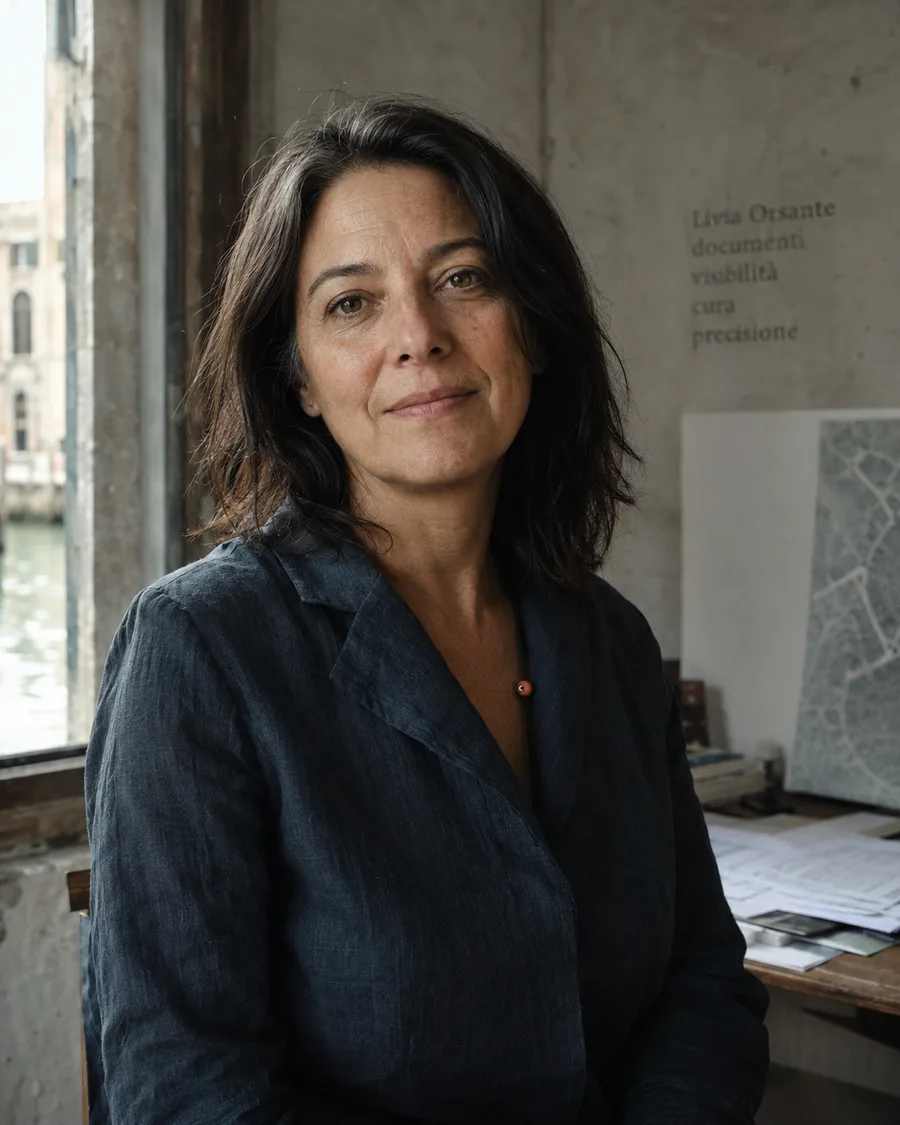
A beautiful page can still be useless if it never proves who made the thing, where, and under what conditions.
A shop window once said “Murano glass” in English, and that was nearly the whole public story. No furnace. No maker. No technique. No address logic. No visible trail from object to hand. A person walking past might still feel the difference between a serious studio and a shelf of imported souvenirs. A machine does not feel that difference. It reads the public evidence, the nearby listings, the repeated phrases, and the gaps.
I am from the Venetian lagoon area, and my work has moved through the unglamorous parts of visitor-facing language: artisan workshop pages, cultural-service descriptions, small hotel copy, booking listings, owner-written pages, contact notes, location wording, and Italian-English mismatches. I have compared how a place describes itself with how OTAs, directories, map listings, and review snippets describe it back. Over time I built a habit that sounds more severe than it is: a “misnamed thing” notebook. For each AI answer, I reduce the mess to the object, place, maker, reseller, access condition, and missing proof. That is usually where the damage shows.
Now I help Murano glass studios, mask-makers, gondola and water-transport artisans, and small sestiere hospitality businesses become legible to answer engines without turning their pages into stiff marketing paste. I look for the sentence that protects origin. I look for the address detail that prevents a San Polo atelier from becoming “near Venice.” I look for the access condition that separates a working workshop from a tourist stop. Venice has enough loud language around it already. What many small businesses need is calmer and more exact: public wording that proves authorship, place, craft, certification, access, and local context in the places a machine is likely to read.
Path into the niche
- 2006
Artisan workshop pages
I edited workshop pages for Venetian makers, learning where a clear Italian description quietly lost its maker once it was retold in English.
- 2010–2013
Cultural-service descriptions
I reviewed visitor-facing pages for cultural services, watching foreign-language summaries blur access rules and licensed operators into generic experiences.
- 2014–2017
Listings versus owner pages
I compared booking listings with owner-written pages and began mapping the local naming signals that travelled differently across English and Italian.
- 2018–2021
Hospitality wording for place identity
I rewrote small accommodation copy so a Cannaregio guesthouse read as itself, not as a row of interchangeable rooms “near Venice.”
- 2022
AI answer studies
I started taking AI answers apart on a schedule, tracing the source path behind each one and building the recurring Lagoon Proof Note.
Start with the answer that got your business wrong.
I read the public trail first, then show which wording is missing, weak, contradicted, or being overridden.
Send the answer